• 512-777-0330


Physical Therapy for Hypermobility &(POTS)

Learn to trust your body, understand your symptoms, and move with confidence

Our approach combines movement, fascial work, proprioception, stability, and nervous system support to create sustainable change without chasing symptoms


Physical Therapy for Hypermobility & POTS

Learn to trust your body, understand your symptoms, and move with confidence

Our approach combines movement, fascial work, proprioception, stability, and nervous system support to create sustainable change without chasing symptoms


Signs of Hypermobility You Might Not Recognize

Bumping into things often or feeling unusually clumsy

Re-injuring the same areas over and over often with “normal” imaging

Diagnosed with fibromyalgia when it may be hypermobiity

Digestive or pelvic floor issues alongside musculoskeletal symptoms

Cold hands and feet or difficulty regulating temperature

Feeling dizzy, lightheaded, or having a racing heart when you stand

Frequently clenching or grinding your teeth

Difficulty sitting still or staying in one position

Your strength feels different from day to day


What to Expect

For optimal results, expect a plan of care of approximately 8–12 visits. This allows us time to address longstanding patterns and build sustainable strength, stability, proprioception, nervous system support, and motor control.

Treatment may include individualized exercise, visceral manipulation (organ mobility), improving myofascial and fascial patterns, cupping, somatic processing, dry needling and more based on your body’s needs.

Our evaluations are designed to begin a plan of care, not as a one-time consultation. You can learn more about what to expect here.

If you’re yet able to commit to follow-up care, our $59 Navigating POTS course is a great place to start.


Who we work with people who:

Understand that regulating the nervous system is foundational to healing

Value health and time as a form of currency

Understand there are no quick fixes and are committed to being an active participant in their care

Have a heightened sensory, emotional, and nervous system sensitivity, often described as Highly Sensitive Persons (HSPs) or empaths

Want a whole-person approach rather than treating one area in isolation

Want to learn how to become body aware to move confidently

What is Hypermobility and How Can Physical Therapy Help?

With a greater range of motion to manage, joints can end up relying on bone closure or hyperextension for stability, or waiting for the nerve itself to stretch before tendons can react and protect these sensitive tissues. Hypermobile individuals often report “muscular tightness” despite appearing flexible, due to neural tension and perceived flexibility limitations.

Hypermobility can affect any joint in the body but frequently creates issues in the cervical spine, shoulder complex, and knee joints. Limited proprioceptive awareness of joints in space is a frequent cause of injury in people with hypermobility. This altered perception can lead to frequent injuries due to lack of attention, quick directional changes, or poor balance protection responses.

Ligamentous laxity can lead to subluxations and dislocations, or a nagging sensation of instability. Joints that don’t feel safe can benefit from techniques to improve proprioception, including stabilization exercises, external feedback techniques like kinesiotaping, and motor control programming. Learning how to manage joints that experience instability and activate musculature appropriately before activity is essential to staying active and enjoying being active.

Watch Our Webinar on Hypermobility & POTS to Discover…

Discover the essential link between hypermobility and POTS, uncovering a crucial correlation pivotal for effective interventions

Explore the impact of misdiagnosing conditions as anxiety and how this misclassification can hinder the healing process

Learn how traits and sensory nuances linked to ADHD and autism can deeply influence one’s bodily experiences and responses to treatment, illuminating new paths to wellness

Diagnoses That We Treat

Postural Orthostatic Tachycardia Syndrome (POTS)

What Is It?​

POTS is a condition where the heart beats abnormally fast in an attempt to regulate blood pressure drops that occur when an individual moves from lying down to sitting up, or from sitting to standing. The autonomic nervous system is responsible for managing these blood pressure changes, but with this syndrome, the connective tissue in the blood vessels may struggle to constrict properly. This makes it difficult to regulate blood volume and can lead to symptoms like lightheadedness, fainting, heat intolerance, or fatigue.

“Coat hanger pain” is a symptom often associated with hypermobility and can be linked to orthostatic hypotension disorders like POTS. This type of pain feels sharp or cramping in the neck and shoulders, and it stems from reduced blood return during prolonged sitting or standing. It can be aggravated by suboptimal exercise prescription.

Many people complain that:

  • Swelling or changes in skin color in the legs after prolonged sitting or standing

  • Lightheadedness with quick position changes

  • Limited tolerance to exercise, especially high-intensity interval training or overhead work

  • Symptoms often relieved by lying down, crossing the legs, or changing positions

*You can also learn more about POTS from our online course by clicking here*
postural orthostatic tachycardia syndrome symptoms
Hypermobility Ehlers-Danlos Syndrome (hEDS) and Hypermobility Spectrum
Disorders (HSD)

What is it?

Hypermobility Ehlers-Danlos Syndrome (hEDS) is a genetic disorder that affects connective tissue and can lead to joint hypermobility, chronic joint pain, and possible recurrent dislocations. Individuals with hEDS typically exhibit hyperextension of multiple joints, extra stretchy skin, and chronic joint pain.

Hypermobility Spectrum Disorders (HSD) encompass individuals who do not meet the diagnostic criteria (including genetic testing) for hEDS but have many of the same symptoms, such as joint instability, chronic fatigue, and pain. Both hEDS and HSD can lead to symptomatic issues, including joint laxity and impaired spatial awareness (impaired proprioception).

Many people complain about:

  • Constant feeling of joint tightness or needing to pop for relief
  • Getting injured seemingly randomly versus during planned physical activity
  • Difficulty learning new movement skills or “poor body awareness”
Pelvic Health and Postpartum Specific Dysfunctions

What Is It?

Hypermobility and limited body awareness frequently result in pelvic floor gripping for stability and difficulty actively relaxing the pelvic bowl. Chronic pelvic floor tightness contributes to stress incontinence, urge issues, and even limited bladder awareness. Additionally, heightened pelvic floor tone can limit pleasure during sex and contribute to pudendal nerve compression, which can mimic UTI-like symptoms. Learning how to manage these symptoms is key to lifelong management of pelvic dysfunction, especially in this population.

While some symptoms of pelvic floor tightness improve with pregnancy due to increased hormones like relaxin, low back or mid-back pain may increase due to extreme postural demands and pelvic instability. Connective tissue healing postpartum takes 6 to 9 months, and individuals with hypermobility can experience longer healing times. They may also be more prone to pelvic floor laxity. Physical therapy for hypermobility conditions can help.

Many people complain that they:

  • Heaviness or dullness in the pelvic floor after workouts or prolonged time on your feet

  • Burning around the bladder and urethra after stressful days or post-intercourse

  • Sudden urge to pee despite no prior warning, which may lead to leaking

Pelvic Health and Postpartum Specific Dysfunctions
Pelvic floor physical therapy for Prolapse
Prolapse
Prolapse

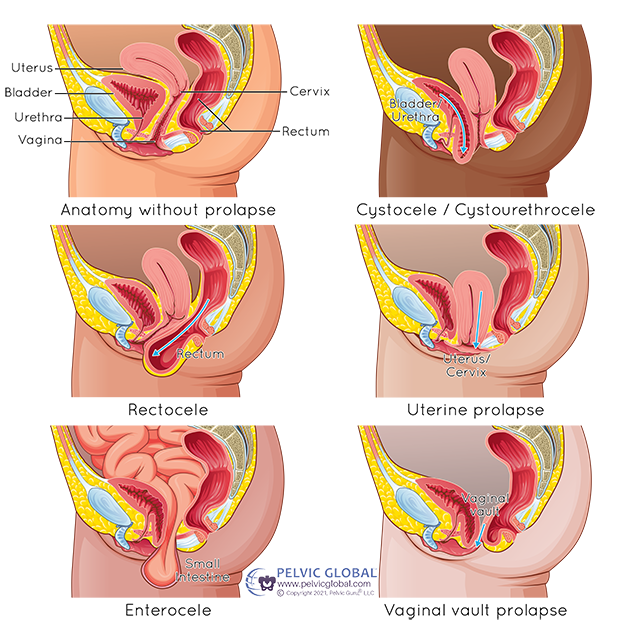
What Is It?

This is when the pelvic organs start to “fall down” into the vagina. The image shows the different types of pelvic organ prolapse.

Many people complain that they:

  • Feel heaviness in the bladder, back or around the vaginal opening or anus
  • Feel like they are wearing a tampon
  • Notice bulging around the vagina or anus
  • Experience double voiding, aka peeing a few minutes after you already have

Learn More About Physical Therapy & Hypermobility with Our Blog