• 512-777-0330

Menopause & Perimenopause

What is Perimenopause?!

What is Perimenopause?! 593 597 ResilientRx

In this episode, Dr. Mary Grimberg invites Dr. Andrea George to illuminate what perimenopause actually is—and, importantly, shed light on why so many people feel stuck or left in the dark during this transition.


What You’ll Take Away (And Why It Matters):

  • Perimenopause Isn’t a Quick Event. It’s not a sudden switch—it can stretch across 4 to 8 years.
  • You Might Be Experiencing This Earlier Than You Think. If you’re in your late 30s or 40s and noticing shifts in your cycles, mood, or energy, this could be it—not an unexplained mystery.
  • Symptoms Can Be Easily Misread. Mood swings, irregular periods, low libido, foggy thinking—these are common during perimenopause, yet often dismissed or misdiagnosed.
  • The Right Care Isn’t Always Easy to Find. Dr. George discusses the challenges of accessing informed, compassionate providers—and what direct care models offer instead.
  • Hormonal Treatment Isn’t One-Size-Fits-All. The conversation covers the difference between bioidentical hormones, compounded prescriptions, and standard HRT—and how to decide what might be right for you.
  • There Are Smart, Sustainable Non-Hormonal Options—Too. Stress management, strength training, and lifestyle shifts can be powerful tools alongside or instead of hormones.
  • Strength Isn’t Just Physical. Building muscle, mitigating insulin resistance, and understanding how body composition changes in this phase—these are foundational to both physical and emotional resilience.
  • You Don’t Have to Accept “Just Get Through It.” With the right support, tracking your body, and trusting your experience, this transition can be navigated with clarity—not confusion.

Why This Episode Resonates

This isn’t your typical “yield to menopause” messaging. It’s a smart, empathetic talk that rejects ageism, normalization of symptoms, or casual dismissal of real pain. Dr. George and Dr. Mary bring nuance, honesty, and a sense that your body’s wisdom matters.


Bottom Line (Because You Deserve It):

Perimenopause isn’t something to ride out. It’s a demand—to stop settling, advocate for yourself, and seek care that honors your experience.

If this episode spoke to you, and you’re ready to be seen and supported—you’re not alone. Our Menopause & Perimenopause Treatment program is designed to meet this moment—not gloss over it. You deserve a plan that gets you, not just your symptoms. Empowerment is waiting.

perimenopause natural treatment

Perimenopause Isn’t a Diagnosis—It’s a Midlife Shift

Perimenopause Isn’t a Diagnosis—It’s a Midlife Shift 594 596 ResilientRx

Dr. Theresa Pugh joins Dr. Mary in this episode to peel back the curtain on perimenopause—with no fluff, no dismissal, and absolutely no judgment. Their conversation isn’t about pathologizing a natural life shift; it’s about unpacking it with clarity and integrity.


What We Cover (And Why It Matters):

  • It starts earlier than you think. Many people in their 30s and 40s are already navigating this transition—and often getting told they’re “too young” for it.
  • Hormones are… complicated. Estrogen dominance and low progesterone can coexist, creating confusing symptoms like insomnia, anger, or waking at 3 a.m.
  • Symptoms aren’t just “in your head.” Think tight shoulders, constipation, frozen shoulder, hip pain, or anxiety—they can all link back to hormonal shifts, stress, and nervous system overload.
  • Labs don’t always give the complete story. Instead, Dr. Pugh recommends looking at symptoms in patterns, considering fascia, stress, and nervous system health as part of the bigger picture.
  • Supplements & tools (when used wisely). Expect thoughtful discussion around DIM, methylated B-vitamins, hormone detox, and what to do if progesterone doesn’t agree with you.
  • Track symptoms like a pro. Because when your experience matters—and the system often minimizes it—you need to show up for yourself with clear documentation and advocacy tools.

Why This Episode Feels So Different

This isn’t the usual “just wait it out” script. It’s a smart, human-first conversation grounded in integrative medicine. Dr. Pugh—who brings the lived-in wisdom of someone who’s navigated autoimmune illness herself—gives us nuance, not narratives. Her reflections aren’t just informed by medicine; they’re informed by compassion and real-world complexity.


Bottom Line (Because You Deserve It)

Perimenopause isn’t a broken code or a diagnosis to passively accept—it’s a phase that asks us to pause, understand, and intentionally respond. You don’t have to go it alone, and you don’t have to pretend everything is “fine.”

If this conversation resonated with you, and you’re ready to get real answers—and real relief—our Menopause & Perimenopause Treatment program is designed to address root causes, not just mask symptoms. Together, we’ll create a plan that supports your body, your energy, and your quality of life through every stage of midlife.

Because this isn’t just a shift—it’s an opportunity to feel stronger, clearer, and more connected to yourself than ever before.

PH Scale

Why do I keep getting yeast infections?

Why do I keep getting yeast infections? 1024 540 ResilientRx

Chronic UTIs, bacterial vaginosis and yeast infections can occur for a variety of reasons.

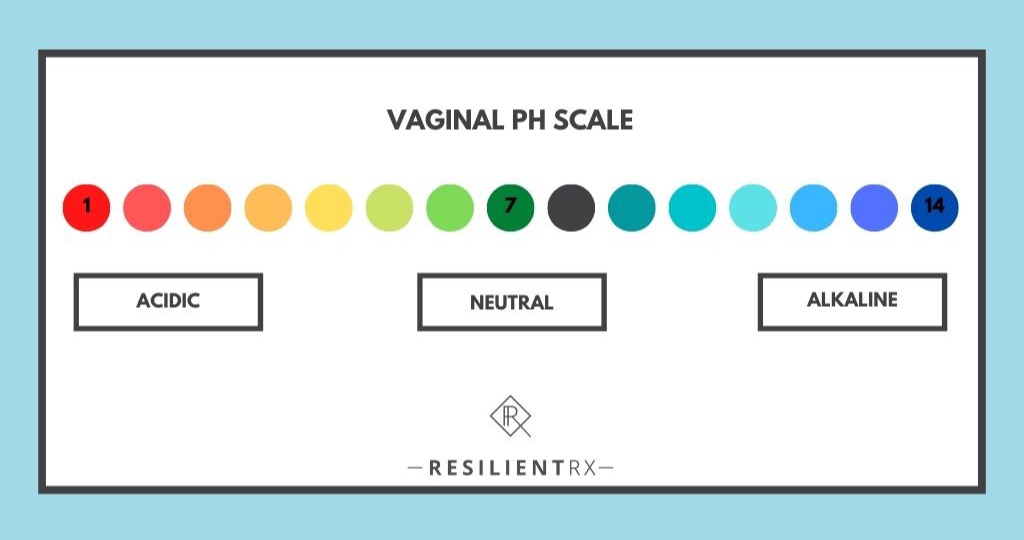
In order to understand why chronic vaginal infections occur, we need to review the pH scale.

The scale goes from 0-14:

  • 0 being acidic
  • 7 is neutral
  • 14 being alkaline (or basic)

In its natural state, the vagina is more acidic, with a pH of about 4. Changing the pH of the vagina can have a direct effect on the vaginal environment which can cause a variety of symptoms.

Here are a few things that can change the vaginal pH:

  • Sperm: This is more basic, ~7 pH. Some may think they are allergic to sperm, but in reality that their vaginal pH is off which is causing a reaction to the sperm.
  • Stress: Increased blood sugar
  • Soap
  • Detergent
  • Lube
  • Diet: Foods high in sugar
  • Douching
  • Wet clothing
  • Tight clothing: Clothing that traps moisture
  • Medications: Like antibiotics
  • String from the IUD
  • Decreased estrogen: Menopause, breast feeding and taking oral contraceptives decrease estrogen, which decreases acidity (Harvard Health Publishing, 2019)

Decreased acidity in the vagina can cause:

  • Dryness
  • Yeast infections
  • Recurrent UTIs
  • Bacterial vaginosis
  • Pelvic pain

Maintaining healthy bacteria in the vagina is important in reducing risk of infections.

Lactobacillus is the most dominant bacteria in the vagina (over 70% in asymptomatic reproductive age women). It also produces lactic acid which causes the acidity in the vagina and this is what keeps the vaginal environment in equilibrium. Loss of lactobacillus is linked to chronic bacterial vaginosis (Tachedjian, et al., 2017).

In addition, bacterial vaginosis (BV) can cause issues with fertility.
“Bacterial Vaginosis is three times more common in infertile women than fertile women” (American Pregnancy Association, 2020). BV, and other infections in general, can decrease fertility in a number of ways:
  • Increasing inflammation and immune system activity, making a toxic environment for reproduction
  • Causing damage to sperm and vaginal cells
  • Interfering with the production of healthy cervical mucus during ovulation
  • Blocking the fallopian tubes through scar tissue damage from infections, so that sperm and egg can’t meet” (American Pregnancy Association, 2020).
If you are experiencing chronic pelvic infections, you may want to consider looking at some of the suggestions above to see if restoring your normal vaginal pH can help reduce your chronic infections.

Tips to reduce chronic pelvic infections:

  • Only wash your vulva and vagina with water
  • Try to use unscented detergents without harsh chemicals
  • Try a low sugar/carbohydrate diet
  • Reduce your stress levels
  • Air out your vagina: Try going without underwear to reduce bacterial growth from excessive moisture
  • Avoid tight or wet clothing for long periods of time
  • Talk to a pharmacist or your physician about a vaginal probiotic, especially if you are taking an antibiotic
  • Change out your tampons regularly.
  • Don’t douche

As always, you should consult with your physician first.

Written by: Mary Grimberg PT, DPT, OCS

Sources: Harvard Health Publishing. (2019, March). Vaginal yeast infection. Retrieved February 3, 2021, from https://www.health.harvard.edu/a_to_z/vaginal-yeast-infection-a-to-z

Tachedjian, G., Aldunate, M., Bradshaw, C., & Cone, R. (2017, April 20). The role of lactic acid production by probiotic lactobacillus species in vaginal health. Retrieved February 3, 2021, from https://www.sciencedirect.com/science/article/pii/S0923250817300839#bib18

American Pregnancy Association (2020, October). Bacterial vaginosis and fertility. Retrieved February 3, 2021, from https://americanpregnancy.org/getting-pregnant/bacterial-vaginosis-and-fertility-68826/